William E. Johnson

PhD  ·  Author  ·  Researcher  ·  Strategy Consultant

From Human Movement to Machine Intelligence

Books spanning a career at the intersection of science, leadership, and strategy — from foundational texts in exercise science to a forthcoming three-volume series distilling decades of work in strategic planning, assessment, and management.

Across five books and two distinct fields, one question keeps returning: what does it actually take for people to adapt, grow, and do their best work?

William E. Johnson, PhD

The Bookshelf

Published titles across two disciplines — with a strategy trilogy on the way. Click any cover.

The AI-Literate Marketer
2026
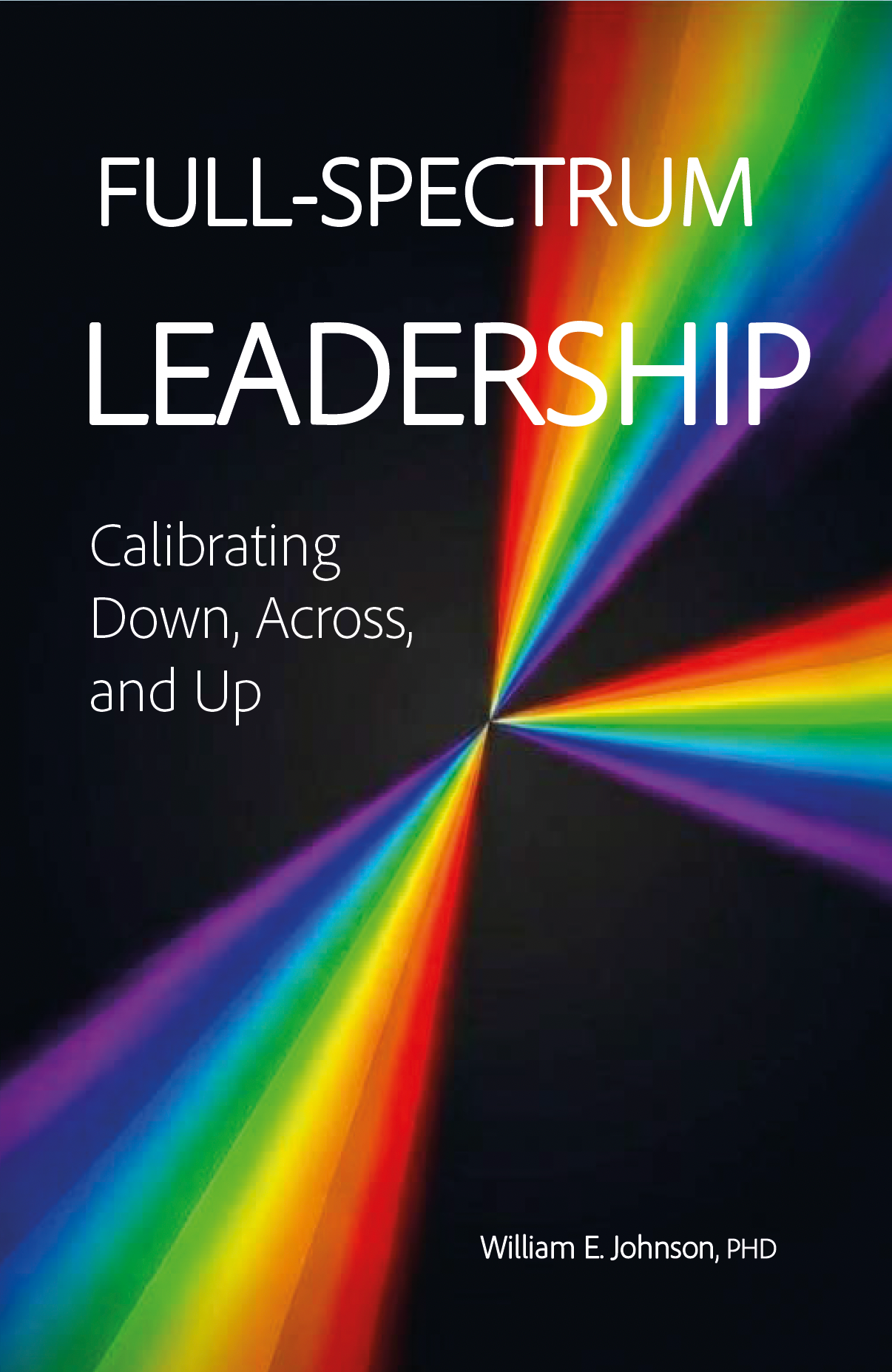
Full-Spectrum Leadership
2026
Introduction to Exercise and Sports Science
2024
Wellness for Life
Wellness for Life
2004
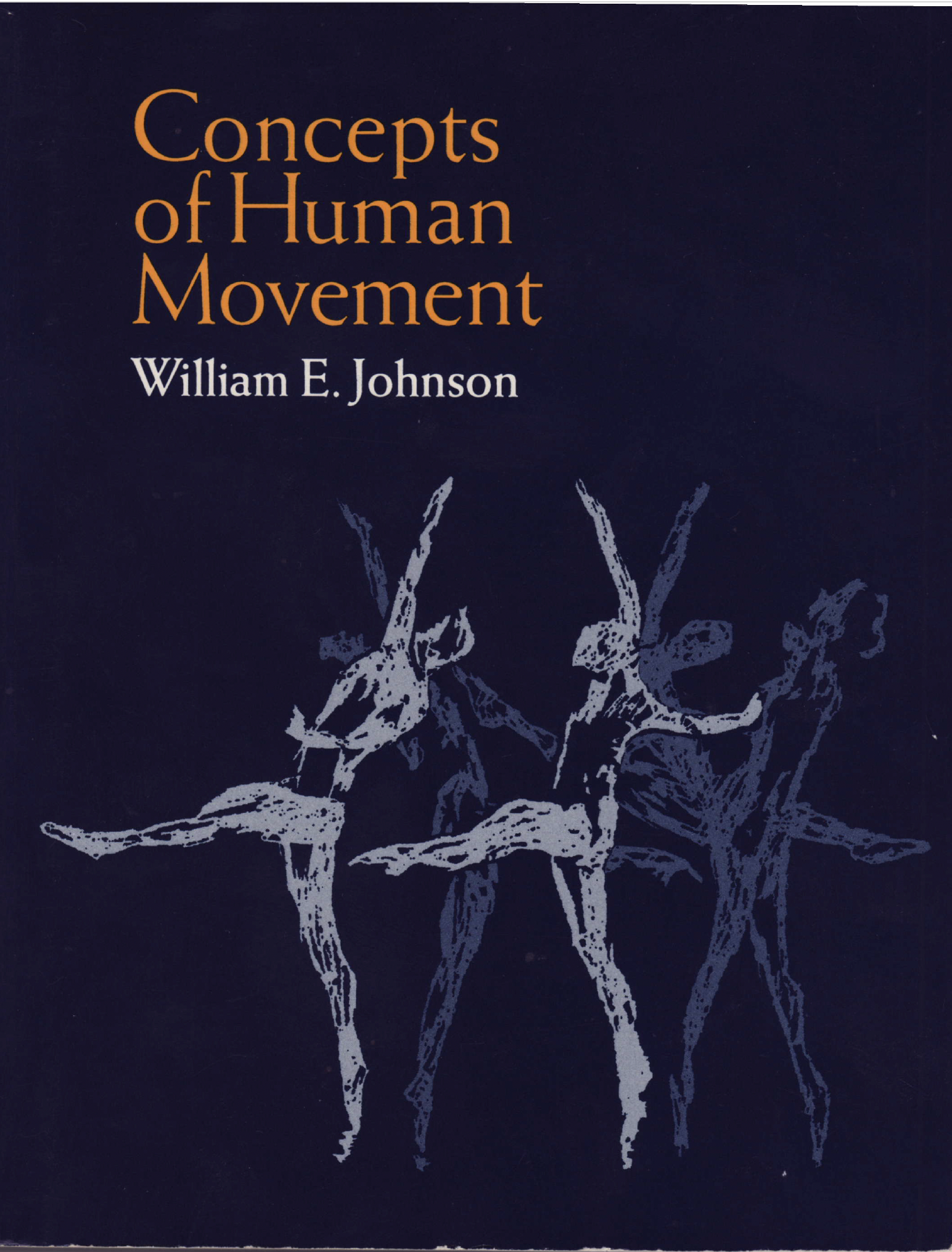
Concepts of Human Movement
1991
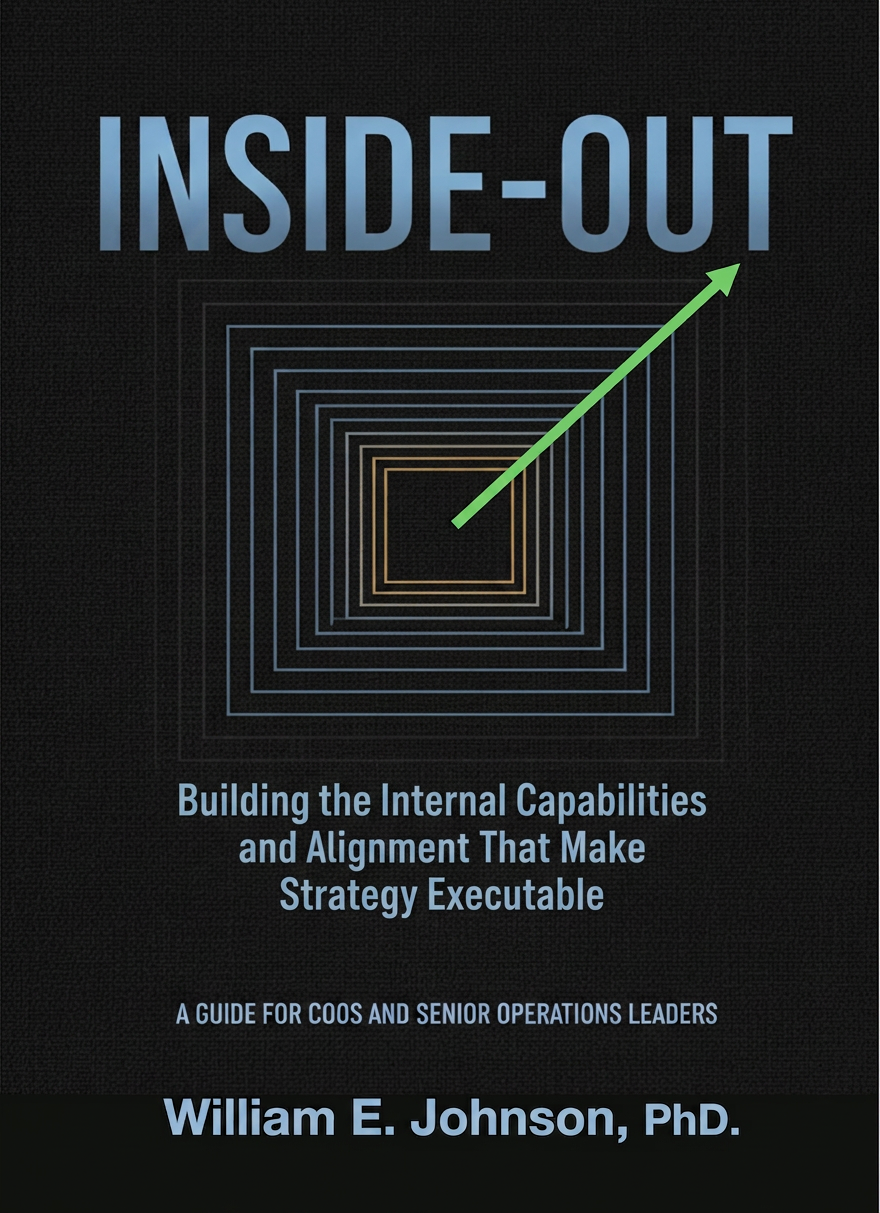
Inside Out
Inside Out Strategy
Forthcoming
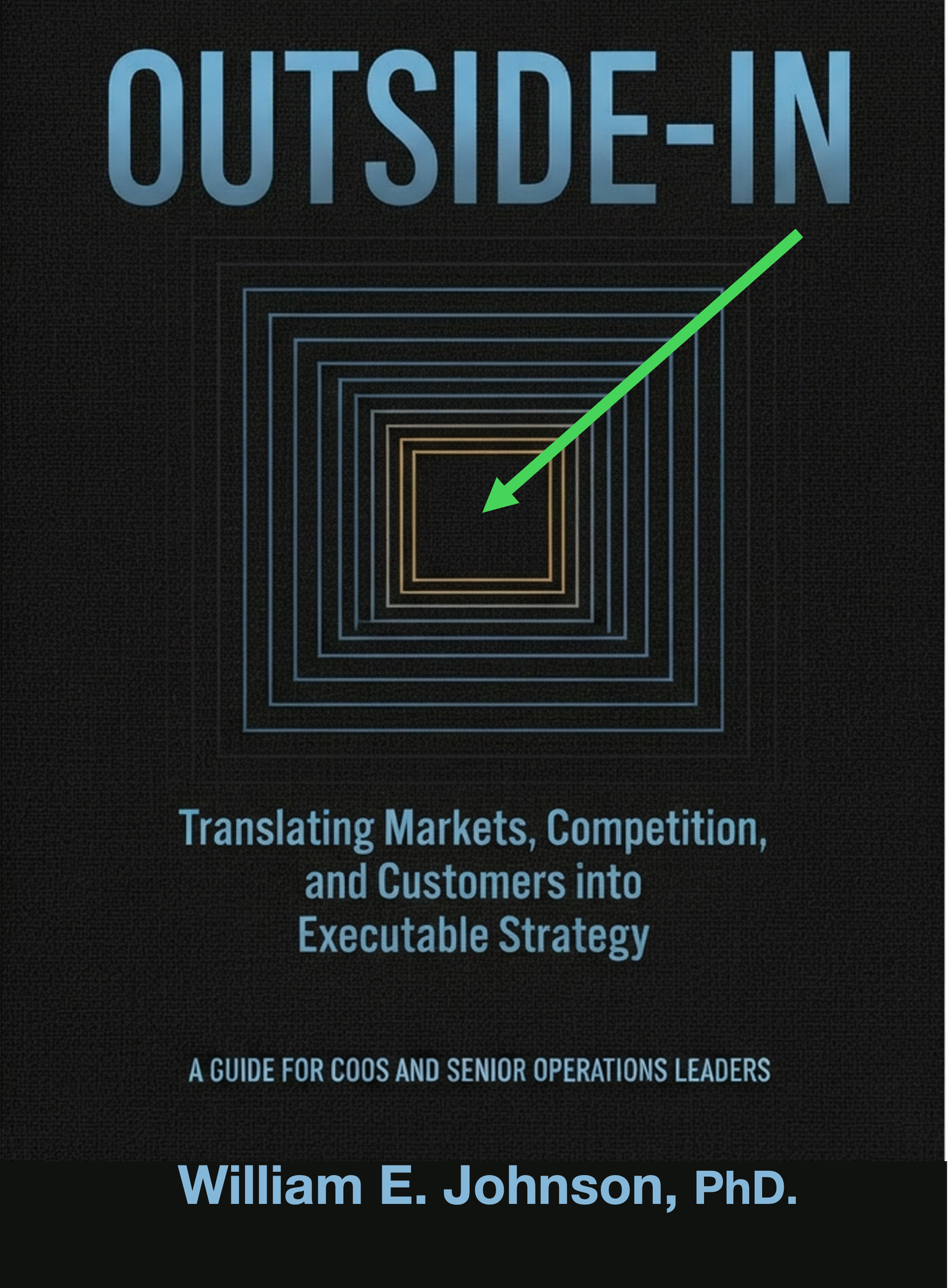
Outside In
Outside In Strategy
Forthcoming
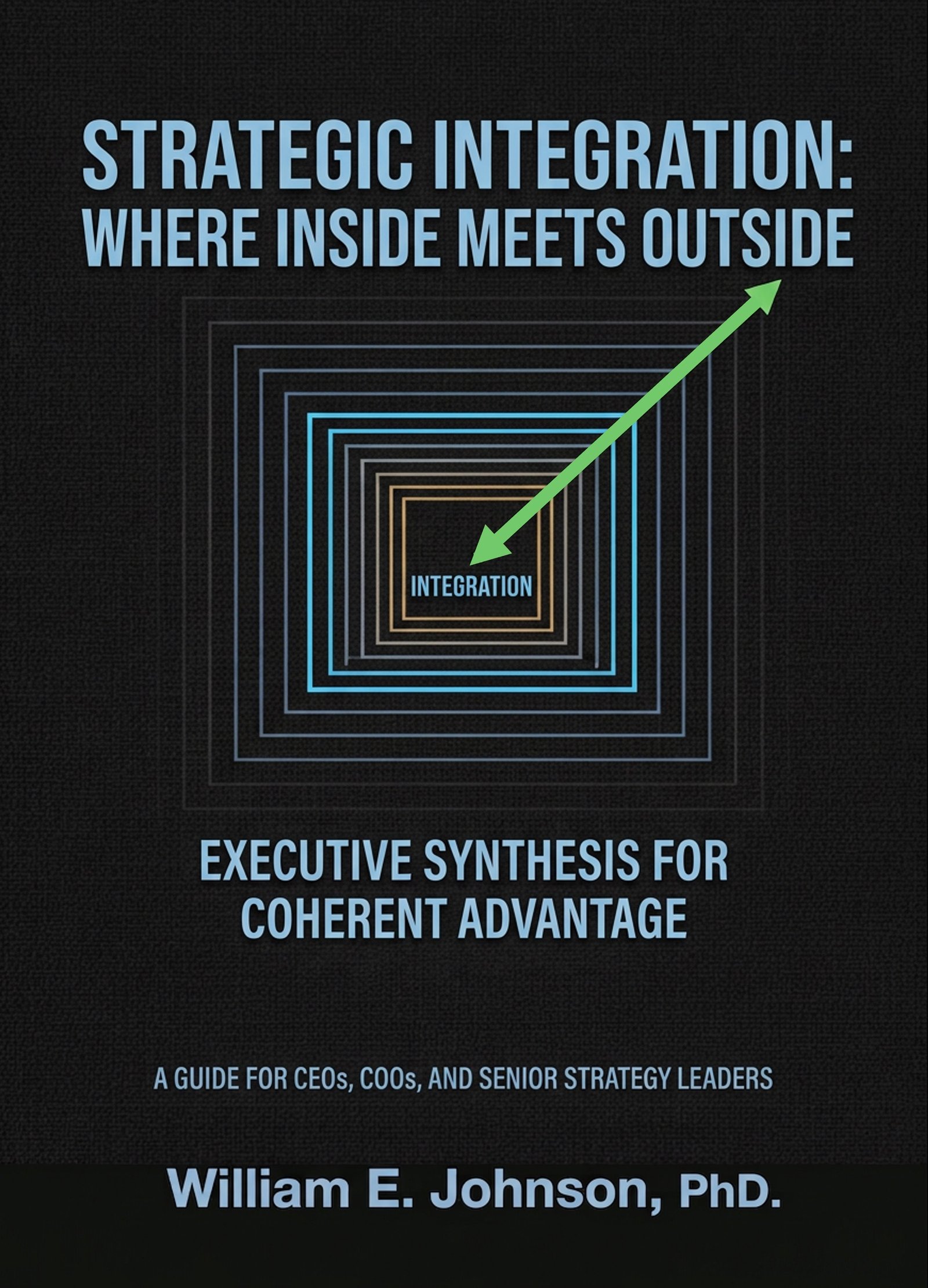
Strategic Integration
Forthcoming

The Bookshelf

Published titles across two disciplines — with a strategy trilogy on the way. Click any cover for the full book page.

The Strategy Trilogy Forthcoming

Drawn from decades of work as a strategic planning, assessment, and management consultant, this three-volume series builds toward a single conviction: durable advantage is engineered where internal capability and external positioning meet.

Inside Out
Inside Out
Building the Internal Capabilities and Alignment That Make Strategy Executable
Volume I · The Strategy TrilogyA Guide for COOs and Senior Operations Leaders
Outside In
Outside In
Translating Markets, Competition, and Customers into Executable Strategy
Volume II · The Strategy TrilogyA Guide for COOs and Senior Operations Leaders
Strategic Integration
Strategic Integration: Where Inside Meets Outside
Executive Synthesis for Coherent Advantage
Volume III · The Strategy TrilogyA Guide for CEOs, COOs, and Senior Strategy Leaders
Leadership & Marketing
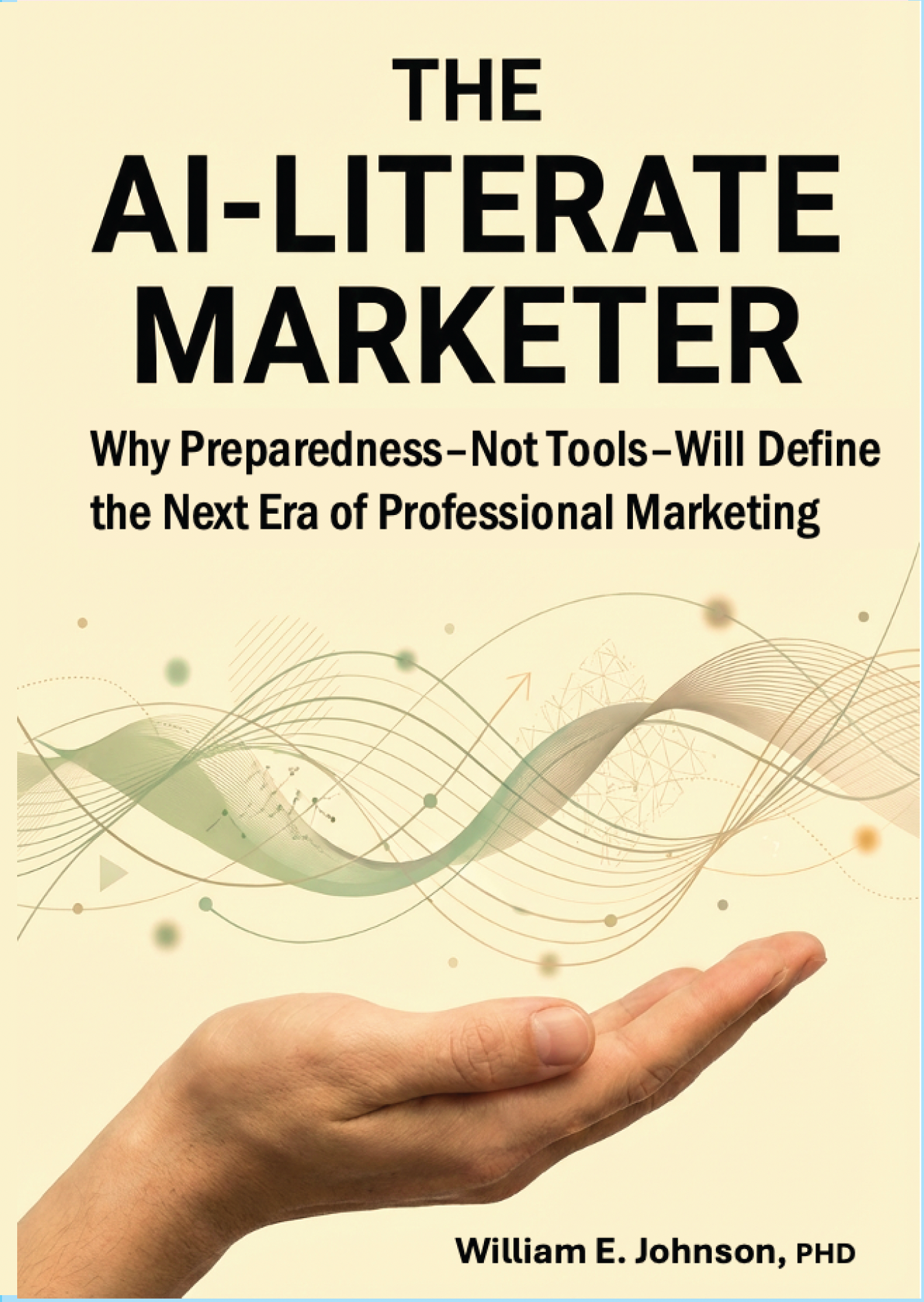
The AI-Literate Marketer
Why Preparedness—Not Tools—Will Define the Next Era of Professional Marketing
2026 · SportSource ProductionsISBN 979-8-9913068-2-9
Full-Spectrum Leadership
Calibrating Down, Across, and Up
2026 · SportSource ProductionsISBN 979-8-9913068-4-3
Exercise & Sports Science
Introduction to Exercise and Sports Science
A Complete Career Map of the Field
2024 · SportSource ProductionsISBN 979-8-9913068-0-5
Wellness for Life
Wellness for Life
A Five-Dimensional Approach to Health
2002 · Eddie Bowers PublishingISBN 1-57879-049-2
Concepts of Human Movement
An Integrated Introduction to Exercise Science
1991 · Kendall/Hunt PublishingISBN 0-8403-6509-8
Full-Spectrum Leadership
Calibrating Down, Across, and Up
2026 · SportSource ProductionsISBN 979-8-9913068-4-3

"Promotion rewards depth. Leadership demands range."

"Calibrating Down, Across, and Up."

"Mastery is not dominance in one direction. It is disciplined modulation across all of them."

"The leadership gap nobody talks about."

"Range is a discipline."

About This Book

Summary

Most leadership failures don't begin with incompetence. They begin with promotion.

In Full-Spectrum Leadership, William E. Johnson, PhD, confronts the leadership gap nobody talks about: the moment a talented individual is elevated into broader responsibility, yet continues to operate with a narrow, downward-facing model of what leadership requires. Promotion rewards depth—mastery within a domain. But real leadership demands range—influence across boundaries.

Johnson reframes leadership not as a vertical chain of command, but as a discipline practiced in three distinct directions. You lead down through authority and development, across through influence among peers who don't report to you, and up through courage and strategic stewardship. Each direction demands a different posture, carries different risks, and requires a different discipline—and strength in one does not automatically translate into the others.

Through the story of Elena Ramirez, a healthcare executive facing three converging pressures in a single week, and a series of sharp, practical frameworks, Johnson shows leaders how to expand their influence in every direction without losing integrity in any of them. The result is a clear-eyed, tool-rich guide to the kind of leadership that holds steady precisely when pressure converges.

Because range is not natural. It is practiced. And it will be tested.

Look Inside

Table of Contents

Front Matter
  • Preface: The Leadership Gap Nobody Talks About
  • The Three-Direction Insight
Part I — Leadership in Three Directions
  • 1. Leadership Is Directional
  • 2. The Foundations of Influence
  • 3. Reading the Organizational Landscape
Part II — Leading Down: Authority Plus Influence
  • 4. The Disciplined Use of Authority
  • 5. Commitment, Not Just Compliance
  • 6. Delegation, Development, and the Discipline of Restraint
  • 7. Leading Through Uncertainty
Part III — Leading Across: Influence Among Equals
  • 8. The Unique Challenge of Peer Leadership
  • 9. Understanding Peer Incentives
  • 10. Building Relationship Capital
  • 11. The Mechanics of Lateral Influence
  • 12. Managing Conflict and Building Coalitions
Part IV — Leading Up: Courage and Stewardship
  • 13. The Miscalculation
  • 14. The Nature of Upward Influence
  • 15. Earning Strategic Voice
  • 16. Modes of Leading Up
Part V — Integration and the Inner Work
  • 17. The Residue
  • 18. Convergence
  • 19. The Quiet Work
  • 20. The Discipline
  • 21. The Range You Carry
Back Matter
  • Epilogue: Tracing the Arc
  • Tools for Practice (Five instruments: Directional Diagnostic, Directional Stress Mapping, Calibration Protocol, Expanding Your Range, Convergence Rehearsal)
  • Appendix: Final Integration Prompt
  • Annotated Bibliography
What You'll Learn

Key Takeaways

  • 1.Leadership is directional, not vertical. The majority of leadership work happens laterally and upward—in rooms where no one reports to you and where authority is irrelevant or even inverted.
  • 2.Promotion creates a hidden trap. The skills that earn advancement do not automatically scale into broader leadership. The result is rarely visible failure—it's plateau: stalled careers, narrowing influence, and leaders working harder rather than wider.
  • 3.Influence rests on three foundations. Credibility, trust, and resonance determine whether influence travels at all—and they operate independently of formal authority.
  • 4.Leading down means stewarding trust while raising standards. Authority is precision, not volume. Commitment beats compliance, and delegation without trust collapses into surveillance.
  • 5.Leading across is a repeated game. You cannot compel peers. Lateral influence is built before conflict and won through framing, sequencing, and timing rather than argument.
  • 6.Leading up requires courage and calibration. The first failure upward is usually omission, not confrontation. Strategic voice is earned long before it's needed.
  • 7.Range holds when pressure converges. Mature leadership is the disciplined modulation of competing instincts under strain.
  • 8.Growth means reducing distortion, not adding tools. The discipline is recognizing your dominant and avoided directions—and regulating them in real time.
Who It's For

Target Reader

Positioned for newly promoted and mid-to-senior leaders navigating the transition from individual contribution to multi-directional leadership: emerging executives, directors and VPs, high-potential managers in leadership-development pipelines, and the L&D, coaching, and HR professionals who support them. The healthcare-system narrative grounds the concepts in a high-stakes setting, giving the book strong resonance for leaders in healthcare, large enterprises, and any matrixed organization where lateral and upward influence determine success.

Why This Book

Distinctive Features

What separates this title in a crowded leadership category is its single organizing metaphor—the three directions of influence—carried consistently from premise to practice. Rather than a loose collection of tips, it offers an integrated framework, a continuous narrative thread (Elena Ramirez), and a closing toolkit of five practical instruments plus a thematically organized annotated bibliography. The writing is deliberately spare and aphoristic, making it highly quotable.

Buy at SportSource
The AI-Literate Marketer
Why Preparedness—Not Tools—Will Define the Next Era of Professional Marketing
2026 · SportSource ProductionsISBN 979-8-9913068-2-9

"Don't chase AI. Command it."

"Why preparedness—not tools—will define the next era of marketing."

"AI literacy is not tool proficiency. It is professional judgment, applied."

"AI will evolve. Prepared professionals will lead."

"Stop collecting tools. Start building systems."

About This Book

Summary

The tools will keep changing. The prepared marketer will keep leading.

In The AI-Literate Marketer, William E. Johnson, PhD, confronts the assumption quietly distorting the marketing profession: that success in the age of artificial intelligence belongs to whoever adopts the most tools. It doesn't. AI now drafts, plans, analyzes, publishes, and optimizes—work that once took hours now takes minutes. But access to capability is not the same as command of it. Tools alone don't create better marketers. Preparedness does.

Johnson reframes AI not as a collection of platforms to chase, but as a system to be governed. AI literacy, in his account, is not tool proficiency—it is the disciplined ability to evaluate, guide, constrain, and integrate AI across the full marketing workflow while preserving the things automation cannot supply: judgment, creativity, credibility, and ethical responsibility.

Through a clear systems map, the C.R.A.F.T. prompt framework, governance principles, and stage-by-stage integration blueprints, Johnson shows marketers how to move from one-off experimentation to scalable, trustworthy systems—using AI as augmentation rather than replacement.

Because the tools will evolve. And the marketers who are ready will be the ones who lead.

What You'll Be Able to Do

Outcomes

You won't just read about AI in marketing—you'll leave with working capability to put it to use. By the end of this book, you will be able to:

  • Increase your productivity without sacrificing quality. Learn where AI genuinely accelerates the work—and where human oversight protects the standards your brand depends on.
  • Write prompts that produce reliable, high-performing output. Using the C.R.A.F.T. framework, turn vague requests into precise, repeatable instructions and build a prompt library that compounds in value with every campaign.
  • Choose tools with confidence instead of chasing them. Apply a clear decision framework to evaluate any platform against your actual needs—and recognize when not to add a tool at all.
  • Build repeatable workflows across the full marketing lifecycle. From strategy and content to distribution, engagement, and analytics, know how to integrate AI at each stage so the work scales without breaking.
  • Connect isolated experiments into integrated systems. Move from one-off wins to architected, governed workflows that produce consistent results.
  • Practice responsibly and protect your brand. Address bias, maintain transparency, and safeguard privacy as standard practice—turning ethical discipline into competitive advantage.
  • Develop skills that outlast any single platform. Build the judgment, systems thinking, and adaptive mindset that keep you leading no matter how fast the tools evolve.
Look Inside

What's Inside

Part I — Foundations of AI Marketing Systems
  • Chapter 1 — From Tool Chasing to Systems Thinking
  • Chapter 2 — Foundations of AI Marketing Systems
  • Chapter 3 — Prompt Engineering for Marketers (The C.R.A.F.T. Framework)
  • Chapter 4 — Choosing the Right AI Tools
Part II — Workflow Stages & Tool Applications
  • Chapter 5 — Strategy, Planning & Communication Management
  • Chapter 6 — Content & Copy Generation
  • Chapter 7 — Social Media Management & Distribution
  • Chapter 8 — Engagement, Response & Conversational AI
  • Chapter 9 — Rich Media Marketing: Audio & Video Production
  • Chapter 10 — Analytics & Optimization
Part III — Integration & Systems
  • Chapter 11 — Building Your AI Marketing System
Part IV — Professional Practice & Identity
  • Chapter 12 — The Future of AI Marketing
What You'll Learn

Key Takeaways

  • 1.Preparedness beats tooling. The next era of marketing won't be defined by who adopts the most platforms, but by who develops the judgment, systems thinking, and ethical grounding to use them well. Access is not advantage.
  • 2.AI literacy is a competency, not a toolkit. Literacy is the ability to evaluate, guide, constrain, and integrate AI responsibly—skills that remain valuable no matter which tools rise or fall.
  • 3.Think in systems, not features. The AI Marketing Workflow Systems Map shows where AI integrates across the full lifecycle and reveals how each stage feeds the next in a continuous loop.
  • 4.The quality of your ask determines the quality of your output. The C.R.A.F.T. framework—Context, Role, Action, Format, Tone—turns vague prompts into repeatable, high-performing instructions.
  • 5.Know what AI can and cannot do. Automation should augment, not replace. Human oversight remains essential where brand voice, strategic intent, ethical judgment, and creative direction are at stake.
  • 6.Governance is what keeps systems trustworthy. Responsible practice means addressing bias, maintaining transparency, and protecting privacy—ethics, handled well, becomes competitive advantage.
  • 7.Integration creates the value, not isolated experiments. Real leverage comes from connecting tools into scalable workflows with clear architecture, governance, and long-term sustainability.
  • 8.Durable skills outlast every platform. Critical thinking, systems awareness, and ethical reasoning are the competencies that compound. The mindset of continuous learning is the adaptive advantage.
Who It's For

Target Reader

Written for working marketing professionals—mid-career to senior—who already understand marketing fundamentals and now need to integrate AI into real workflows: marketing managers, directors, and strategists; digital marketing professionals; content leaders and campaign managers; and marketing operations specialists.

The book also serves a strong secondary audience in education—university marketing faculty, business school instructors, curriculum designers, and MBA students—where its structured frameworks make it well-suited as a supplemental text. It is deliberately not a beginner's marketing primer, a technical AI manual for developers, or a collection of tool tutorials.

Why This Book

Distinctive Features

What separates this title in a crowded category is its refusal to chase platforms. Rather than tool tutorials or comparisons that age the moment they're printed, The AI-Literate Marketer is organized around durable conceptual architecture: the AI Marketing Workflow Systems Map, the C.R.A.F.T. prompt framework, a governance model addressing ethics and oversight, and stage-by-stage integration blueprints. The book frames AI as a systems challenge rather than a software problem, positioning professional judgment as the central variable in AI effectiveness.

⏳ Won't this be obsolete in a year? It's the fair question—and this book is built to answer it. The AI-Literate Marketer is deliberately not organized around specific tools or features that age the moment they ship. It's organized around what doesn't expire: systems thinking, sound judgment, repeatable frameworks, and ethical practice. The platforms referenced will change. The C.R.A.F.T. method, the workflow systems map, the governance principles, and the integration blueprints will not. This is a book about the marketer—not the software—and that's precisely what gives it a shelf life the tools themselves will never have.

Buy at SportSource
Introduction to Exercise and Sports Science
A Complete Career Map of the Field
2024 · SportSource ProductionsISBN 979-8-9913068-0-5493 pages · Full color

"One field. Countless careers. A lifetime of possibility."

"From the palaestra to the performance lab."

"Where the history of movement meets the future of human performance."

"The complete map of a field in motion."

"Understanding the body is the beginning. Building a career is the point."

About This Book

Summary

Every gym, every training room, every Olympic broadcast, every physical education class contains a hidden question: what does it actually take to build a career here?

In Introduction to Exercise and Sports Science, William E. Johnson, PhD, answers that question at scale. Rather than narrowing the field to a single lane—fitness, medicine, coaching, or research—Johnson maps the entire territory, tracing the discipline from its roots in ancient Greek palaestras and Roman gymnasia to the AI-driven performance labs of today's professional sports franchises.

The book unfolds in three movements. It begins by grounding readers in the historical, cultural, and societal foundations of physical education and sport—showing how movement, medicine, and meaning have been intertwined since Hippocrates first prescribed exercise as treatment. It then turns to the health-related careers that apply exercise science to everyday well-being: fitness and wellness coaching, clinical exercise physiology, physical activity epidemiology, corporate wellness, and physical/health education. Finally, it moves into the performance-related careers that push human capability to its limits: sport coaching, biomechanics, sport psychology, strength and conditioning, high-performance exercise physiology, and sports medicine.

Throughout, Johnson pairs scholarly depth with practical utility—outlining the specific degrees, certifications, and licensure pathways behind each career, and illustrating every chapter with real case studies. The result is a single, richly illustrated volume that functions simultaneously as an academic textbook, a career atlas, and a tribute to the athletes, scientists, and practitioners who have shaped this dynamic field.

Because exercise and sports science is not one profession. It is dozens of professions, converging on a single truth: that the study of human movement is also the study of human potential.

Look Inside

Table of Contents

Introduction
  • Exercise Science and Sports Science: An Introduction
Unit I — Historical, Cultural, and Societal Foundations
  • 2. Historical Foundations: European Background
  • 3. Sport & Culture
  • 4. Sport Sociology: Sport as a Tool for Societal Change
Unit II — Health-Related Exercise Science Careers
  • 5. Fitness and Wellness
  • 6. Clinical Exercise Physiology
  • 7. Physical Activity Epidemiology
  • 8. Workplace Wellness / Corporate Fitness
  • 9. Teaching Physical Education and Health
Unit III — Performance-Related Sports Science Careers
  • 10. Sport Coaching
  • 11. Biomechanics
  • 12. Sport Psychology
  • 13. Strength Training and Conditioning
  • 14. Performance Exercise Physiology
  • 15. Sport Medicine
Back Matter
  • Index
What You'll Learn

Key Takeaways

  • 1.Exercise and sports science is not one career—it's a career ecosystem. From personal training to Olympic sports medicine, the field spans dozens of distinct professional paths, each with its own training, certification, and licensure requirements.
  • 2.History explains the present. Understanding how physical education evolved—from Greek and Roman ideals through the nationalist gymnastics movements of Jahn and Ling—illuminates why modern PE, athletics, and wellness culture look the way they do.
  • 3.Health-related careers serve the many. Fitness and wellness, clinical exercise physiology, physical activity epidemiology, workplace wellness, and PE/health teaching apply exercise science to prevent disease and improve quality of life across the general population.
  • 4.Performance-related careers serve the elite. Coaching, biomechanics, sport psychology, strength and conditioning, high-performance physiology, and sports medicine work together to optimize athletic achievement while protecting athlete health.
  • 5.Sport is never just sport. Throughout history, sport has functioned as a mirror of society, a tool for social change, and a stage for activism—from Jackie Robinson and Billie Jean King to Colin Kaepernick and Naomi Osaka.
  • 6.Every career has a documented pathway. The book provides concrete guidance on required degrees, recommended coursework, internships, and the specific certifying bodies (NSCA, ACSM, NASM, APTA, and more) governing each profession.
  • 7.The field is rapidly evolving. Wearable technology, AI-driven analytics, genetic and epigenetic research, and virtual/augmented reality training are reshaping how professionals monitor, train, and treat athletes and patients alike.
  • 8.Mentorship and real-world modeling matter. Case studies of practicing professionals and the elite athletes they support show how classroom knowledge translates into practice across every career pathway.
Who It's For

Target Reader

Positioned as the foundational text for undergraduate students entering exercise science, kinesiology, sport management, physical education, and pre-health programs, this book is equally valuable for high school students and academic advisors exploring health and sports-related career paths, and for career-changers moving into fitness, coaching, wellness, or sports medicine professions.

Its comprehensive, career-mapped structure also makes it a strong resource for university faculty seeking a single-volume introductory course text, as well as for coaches, trainers, and allied health professionals who want to understand how their specialty fits into the broader field.

Why This Book

Distinctive Features

What distinguishes this title in a crowded field of exercise science textbooks is its comprehensive three-part architecture—historical foundations, health-related careers, and performance-related careers—delivered in a single, full-color, 493-page volume. Each chapter integrates rigorous scientific content with a clear roadmap of required education, certifications, and licensure for that specific profession, alongside real case studies of elite athletes and the practitioners who serve them.

The book's historical chapters offer depth rarely found in introductory texts. Its contemporary chapters address current issues—athlete activism, mental health, diversity in coaching, and emerging technologies including AI, wearables, and virtual reality. Author William E. Johnson brings 40 years of academic and industry experience, authorship of two major textbooks, involvement with the 1984 Olympic Trials and Los Angeles Olympic Organizing Committee, and a current appointment as an Artificial Intelligence Research Fellow.

Buy at SportSource
Wellness for Life
Wellness for Life
A Five-Dimensional Approach to Health
2002 · Eddie Bowers PublishingISBN 1-57879-049-2 · 352 pagesCo-authored with Carol D. Foust & Scott W. Roberts

"Health is not the absence of disease. It is the presence of balance."

"Five dimensions. One life."

"Your health is not inherited. It is chosen — daily."

"The mind and the body are not separate patients."

"Wellness is a deliberate effort, not a lucky accident."

"From information to lifestyle: the discipline of wellness."

About This Book

Summary

Most health problems don't begin with a diagnosis. They begin with a thousand small, unexamined choices.

In Wellness For Life, Dr. William E. Johnson, Dr. Carol P. Foust, and Dr. Scott W. Roberts confront the gap between knowing what's healthy and living what's healthy. Traditional health education has taught generations of students to think of wellness as the absence of illness—a negative, reactive standard. This book insists on something more demanding and more useful: wellness as a positive, deliberate, five-dimensional discipline that must be practiced across the physical, intellectual, emotional, social, and spiritual domains of life simultaneously.

The authors reject the notion that health is inherited, lucky, or someone else's job. Drawing on psychoneuroimmunology, exercise physiology, nutrition science, and behavioral medicine, they show that the body, mind, and spirit are interconnected feedback loops—and imbalance in one dimension inevitably erodes the others. A stressed mind suppresses the immune system. A malnourished body undermines emotional resilience. A disconnected spirit weakens the will to change.

Through ten chapters moving from foundational concepts to the major threats to modern health—cardiovascular disease, cancer, addiction, and sexually transmitted disease—Wellness For Life equips readers not just with information, but with instruments: self-assessments, worksheets, target-zone calculators, and behavior-change contracts that convert knowledge into lifestyle.

Because wellness, like leadership, is not a state you arrive at. It is a discipline you practice.

Look Inside

Table of Contents

Front Matter
  • Preface
  • About the Authors
Part Opener — Wellness
  • Chapter 1 — Introduction to Health Wellness · Wellness defined · Five dimensions · Health as Personal Responsibility · National Health Objectives · Self-assessment instruments
  • Chapter 2 — Wellness and Psychosocial Spiritual Health · Psychoneuroimmunology · Brain & Immune System · Thoughts, Emotions & Social Support · Spirituality and Health
  • Chapter 3 — Stress and Stress Reduction for Wellness · Stressors · Three Stages of Stress · Physiological Reactions · Relaxation Techniques (Meditation, Yoga, Biofeedback, Exercise)
  • Chapter 4 — Fitness Assessment and Prescription for Wellness · Energy Systems · Five Components of Physical Fitness · Target Heart Rate Zones · Strength, Endurance, Flexibility
  • Chapter 5 — Nutrition for Wellness · Macronutrients · Vitamins & Minerals · Cholesterol · Nutrition Myths · Food Labels
  • Chapter 6 — Body Composition and Weight Control for Wellness · Obesity · Body Fat Measurement · Energy Balance · Set Point Theory · Yo-Yo Syndrome
  • Chapter 7 — Cardiovascular Disease and Health · Atherosclerosis · Heart Attack & Stroke · Hypertension · Risk Factors · RISKO Heart Hazard Appraisal
  • Chapter 8 — Cancer Prevention and Wellness · How Cancer Works · Site-by-Site Guide · Screening Guidelines · Torabi Cancer Prevention Knowledge Test
  • Chapter 9 — Addiction and Drug Risks to Wellness · Addiction Process · Co-Dependency · Drug Classifications · Marijuana, Cocaine, Tobacco, Alcohol · Resiliency
  • Chapter 10 — Sexuality Issues and Wellness · Healthy Relationships · STDs · HIV/AIDS · Men's and Women's Sexual Health · Self-Assessment Quizzes
Back Matter
  • References
  • Index
What You'll Learn

Key Takeaways

  • 1.Wellness is five-dimensional, not binary. Physical, intellectual, emotional, social, and spiritual health are interdependent—sustained imbalance in one dimension erodes the others, no matter how strong the rest appear.
  • 2.The mind-body connection is measurable, not metaphorical. Psychoneuroimmunology demonstrates that thoughts, emotions, and social connection directly regulate immune function and disease susceptibility.
  • 3.Stress is a physiological event with a predictable arc—alarm, resistance, exhaustion—and it can be actively interrupted through breathing, meditation, biofeedback, and exercise before it becomes chronic disease.
  • 4.Fitness is a science, not a guess. Understanding energy systems, target heart rate zones, and body composition allows for a personalized, sustainable exercise prescription rather than generic advice.
  • 5.Nutrition literacy is disease prevention. Knowing how to read a label, balance macronutrients, and separate myth from evidence protects against the leading diet-related chronic illnesses.
  • 6.Sustainable weight control beats fad dieting. The energy balance equation and set-point theory explain why crash diets fail—and why the yo-yo syndrome makes long-term weight management harder, not easier.
  • 7.Cardiovascular disease and cancer are substantially preventable. The majority of risk lies in controllable lifestyle factors—smoking, diet, inactivity, and stress—not in fate.
  • 8.Addiction follows identifiable psychological and family patterns, including co-dependency and enabling, and effective intervention depends on recognizing them early.
  • 9.Sexual health is relational health. Communication skills, informed consent, and STD/HIV literacy are as essential to wellness as diet and exercise.
  • 10.Health is a daily accumulation of choices. The habits formed in youth compound over a lifetime—the earlier personal responsibility is taken, the greater the long-term payoff.
Who It's For

Target Reader

Wellness For Life is written for the undergraduate student enrolled in an introductory health, wellness, or lifetime-wellness course—the primary audience, given its study questions, key terms, and in-chapter assessment instruments designed for classroom use. Beyond the classroom it serves instructors and curriculum designers in health education, kinesiology, and exercise science; health promotion and wellness professionals (corporate wellness coordinators, fitness trainers, health educators) who need an accessible, evidence-based reference; and general adult readers looking for a single, trustworthy resource connecting fitness, nutrition, stress, disease prevention, and relationships into one coherent framework for personal health decision-making.

Why This Book

Distinctive Features

What separates Wellness For Life in a crowded field of health textbooks is its commitment to application over abstraction. Rather than presenting wellness as a list of facts to memorize, the book is built around a consistent five-dimension framework carried from the opening chapter through every subsequent topic—stress, fitness, nutrition, disease prevention, addiction, and sexuality are all framed as expressions of the same underlying model.

The book also stands out for its density of hands-on instruments: the Lifestyle Assessment Questionnaire, Dimensions of Health Wellness Questionnaire, Goal Worksheet, Stress Vulnerability Scale, Hurry Sickness Questionnaire, target-heart-rate and body-fat calculation formulas, the RISKO Heart Hazard Appraisal, the Torabi Cancer Prevention Knowledge Test, and HIV/AIDS self-assessment quizzes—transforming the book from passive reading into an active workbook for behavior change.

Buy on Amazon
Concepts of Human Movement
An Integrated Introduction to Exercise Science
1991 · Kendall/Hunt Publishing CompanyISBN 0-8403-6509-8 · 281 pages

"Sport doesn't just reflect culture. It is culture."

"The body is one system. This book teaches it as one."

"Physiology, biomechanics, nutrition, and learning: one framework, not four courses."

"Knowledge you can measure in your own pulse."

"Real knowledge enables you to do things, not just know things."

"The foundation upper-division courses are built on."

About This Book

Summary

Most introductory Physical Education courses teach students to know things. Few teach them to do things.

In Concepts of Human Movement, William E. Johnson, PhD, confronts a gap that runs through the entire discipline: exercise physiology, biomechanics, sport sociology, nutrition, and motor learning are almost always taught as separate silos—leaving students with fragments of knowledge and no framework for connecting them. A student can memorize the sliding filament theory of muscle contraction in one course and Newton's laws of motion in another without ever realizing they explain the same push-up.

Johnson rebuilds the introductory course from the ground up around a single conviction: human movement is one integrated system, and understanding it requires moving fluidly between the cultural, the physiological, the mechanical, and the cognitive. The book opens by placing sport inside culture itself—showing how games encode a society's values long before a single muscle fiber or heart rate is ever discussed. From there, it builds outward through the hard science of the cardiorespiratory and muscular systems, the practical mathematics of nutrition and caloric balance, the physics of force and motion that govern every athletic skill, and the cognitive architecture of how movement is actually learned and remembered.

Every chapter insists on application. Concepts are followed immediately by discussion questions, suggested projects, and hands-on laboratories—so that what is learned in the classroom can be measured, tested, and lived in the body. Real student projects are included to show exactly what mastery of these connections looks like in practice.

Because in this discipline, knowledge that cannot be applied to a moving human body isn't yet knowledge at all.

Look Inside

Table of Contents

Front Matter
  • Preface
  • Acknowledgments
Chapters
  • Chapter 1 — Sport and Culture · Sport as Mirror of Society · Values · International Understanding · Sport as Economic Enterprise · Media Money · Terminology
  • Chapter 2 — The Cardiorespiratory System · Heart & Circulatory System · Blood Pressure · Cardiovascular Disease · Risk Factors · Aerobic/Anaerobic Exercise · Fitness Assessment
  • Chapter 3 — The Muscular System · Muscle Structure · Sliding Filament Theory · Motor Unit · Contraction Types · Fiber Types · Training Regimes · Steroids · Sport-Specific Weight Training
  • Chapter 4 — Nutrition · Macronutrients · Caloric Expenditure · Body Composition · Athletic Performance · Carbohydrate Loading · Special Populations
  • Chapter 5 — Mechanical Principles · Newton's Laws · Friction · Fluid Dynamics · Archimedes' Principle · Vector Composition · Glossary of Terms
  • Chapter 6 — Motor Learning · Memory Structure · Forgetting · Selective Attention (Broadbent, Triesman, Norman) · Application to Teaching
Back Matter
  • Appendix A: ACSM Position Stand — Exercise Prescription
  • Appendix B: ACSM Position Stand — Weight-Loss Programs
  • Appendix C: 1996 Atlanta Olympic Economic Impact Analysis
  • Appendix D–E: Student Sample Projects (Sport & Society; Mechanical Principles)
  • Appendix F: Recommended Dietary Allowances
  • Labs 1–8: Heart Rates, Step Test, 1.5-Mile Run, Muscular Fitness, Hydrostatic Weighing, Diet Log, Skinfolds, Hydrodynamics
  • Index
What You'll Learn

Key Takeaways

  • 1.Sport is not separate from culture—it encodes it. From Choctaw wagering games to the modern Olympics, the games a society plays reveal its values, economics, and power structures.
  • 2.The cardiovascular and muscular systems adapt predictably to training. Understanding stroke volume, cardiac output, muscle fiber type, and the overload principle allows exercise prescription to be precise rather than guesswork.
  • 3.Muscle contraction and Newtonian mechanics describe the same event from two angles. The sliding filament theory and the laws of motion are not separate subjects—they are two lenses on a single push, pull, or stride.
  • 4.Nutrition is applied mathematics. Caloric balance, macronutrient ratios, and glycogen loading follow calculable formulas that directly determine performance and body composition outcomes.
  • 5.Force, friction, and fluid dynamics govern every athletic skill. Whether a body is running, swimming, or throwing, its motion is dictated by inertia, acceleration, reaction, and drag—principles that can be measured and coached.
  • 6.Motor learning is a memory problem before it is a physical one. Skills move through short-term sensory store, short-term memory, and long-term memory—and instructional sequencing must respect the limits of each.
  • 7.Selective attention determines what an athlete actually learns from instruction. Competing theories of attention (Broadbent, Triesman, Norman) have direct, practical implications for how coaches cue athletes.
  • 8.Genetics, sex, and age shape—but do not eliminate—trainability. Strength, cardiorespiratory capacity, and body composition all respond to training across the lifespan, even if starting points and rates of change differ.
  • 9.Assessment turns theory into practice. Skinfold measurement, hydrostatic weighing, step tests, and food logs are not academic exercises—they are the tools by which a student verifies what the textbook claims.
Who It's For

Target Reader

Concepts of Human Movement is written first for the beginning Physical Education, Kinesiology, or Exercise Science undergraduate, designed explicitly to serve as the foundational course upon which upper-division and specialty-area classes—exercise physiology, biomechanics, motor learning, sport sociology—are built. Beyond that primary classroom use, the book serves coaches and athletic trainers who need a working, applied reference spanning cardiorespiratory conditioning, strength training program design (organized by individual sport), nutrition for performance, and the mechanics of movement; and future physical educators and health promotion professionals who will need to translate physiological and biomechanical concepts into teachable, measurable activities.

Why This Book

Distinctive Features

What separates Concepts of Human Movement from a typical introductory anthology is its refusal to let disciplines sit in isolation. Rather than treating sport sociology, physiology, biomechanics, nutrition, and motor learning as six unrelated units, Johnson threads a single question through all of them: how does the human body actually move, and what forces—cultural, physiological, mechanical, and cognitive—shape that movement?

The book is further distinguished by its density of applied, hands-on material: eight full laboratories, sport-specific weight training programs for more than twenty individual sports, a complete mechanical-principles glossary, and two full, graded student sample projects. The text grounds its science in primary-source documentation—reproducing in full the American College of Sports Medicine's official Position Stands on exercise prescription and weight-loss programs, and a real economic impact analysis of the 1996 Atlanta Olympic bid.

Buy on Amazon
Inside Out Strategy
Inside Out
Building the Internal Capabilities and Alignment That Make Strategy Executable
Volume I · The Strategy TrilogyA Guide for COOs and Senior Operations Leaders

Forthcoming — Currently in development. Register to be notified at launch.

About This Volume

Summary

Sustainable advantage begins with what the organization uniquely controls — its resources, capabilities, structure, and strategic coherence.

Inside Out is the first volume in William E. Johnson's Strategy Trilogy, drawn from decades of work as a strategic planning, assessment, and management consultant. This volume builds the case that strategy cannot be executed without first engineering the internal conditions that make execution possible: the right capabilities, aligned culture, and coherent organizational design. Written for COOs and senior operations leaders, it provides the frameworks and tools to assess capability gaps, build deliberate alignment, and create the internal foundation upon which external competitive advantage is built.

The Strategy Trilogy

Three Volumes, One Conviction

Durable advantage is engineered where internal capability and external positioning meet.

  • I.Inside Out — Building the Internal Capabilities and Alignment That Make Strategy Executable (COOs & Senior Operations Leaders)
  • II.Outside In — Translating Markets, Competition, and Customers into Executable Strategy (COOs & Senior Operations Leaders)
  • III.Strategic Integration: Where Inside Meets Outside — Executive Synthesis for Coherent Advantage (CEOs, COOs & Senior Strategy Leaders)
Outside In Strategy
Outside In
Translating Markets, Competition, and Customers into Executable Strategy
Volume II · The Strategy TrilogyA Guide for COOs and Senior Operations Leaders

Forthcoming — Currently in development. Register to be notified at launch.

About This Volume

Summary

Advantage begins with where and how an organization chooses to compete.

Outside In is the second volume in William E. Johnson's Strategy Trilogy. This volume turns from internal capability to external positioning—equipping COOs and senior operations leaders with the frameworks to read competitive landscapes, understand market structure, and translate customer insight and competitive intelligence into strategy that can actually be executed. Where Inside Out asks "what do we uniquely control?", Outside In asks "where and how should we compete?"—and provides the analytical tools to answer it rigorously.

The Strategy Trilogy

Three Volumes, One Conviction

Durable advantage is engineered where internal capability and external positioning meet.

  • I.Inside Out — Building the Internal Capabilities and Alignment That Make Strategy Executable
  • II.Outside In — Translating Markets, Competition, and Customers into Executable Strategy
  • III.Strategic Integration: Where Inside Meets Outside — Executive Synthesis for Coherent Advantage
Strategic Integration
Strategic Integration: Where Inside Meets Outside
Executive Synthesis for Coherent Advantage
Volume III · The Strategy TrilogyA Guide for CEOs, COOs, and Senior Strategy Leaders

Forthcoming — Currently in development. Register to be notified at launch.

About This Volume

Summary

Sustainable advantage emerges only when internal capability and external positioning are deliberately integrated through disciplined choice, governance, and adaptation.

Strategic Integration: Where Inside Meets Outside is the capstone volume of the Strategy Trilogy—the executive synthesis that brings the inside-out and outside-in perspectives together into a coherent, actionable framework for competitive advantage. Written for CEOs, COOs, and senior strategy leaders, this volume addresses the hardest strategic challenge: not formulating either capability or positioning, but making them work together as one system.

"Durable advantage is never inherited. It is engineered — where internal capability and external positioning are deliberately made to meet."

The Strategy Trilogy

Three Volumes, One Conviction

Durable advantage is engineered where internal capability and external positioning meet.

  • I.Inside Out — Building the Internal Capabilities and Alignment That Make Strategy Executable
  • II.Outside In — Translating Markets, Competition, and Customers into Executable Strategy
  • III.Strategic Integration: Where Inside Meets Outside — Executive Synthesis for Coherent Advantage
William E. Johnson, PhD

William E. Johnson

PhD  ·  Author  ·  Researcher  ·  Strategy Consultant

William E. Johnson, PhD, has spent his career studying how people and organizations perform — first in the laboratory and the classroom of human movement, and later in the boardrooms and planning sessions where strategy is set, leadership is tested, and artificial intelligence is reshaping professional practice.

Across his books and consulting work, one question keeps returning:

"What does it actually take for people and organizations to adapt, grow, and do their best work?"

PhD — Author across exercise science, leadership & strategy
Foundational texts in exercise & sports science (1991–2024)
Leadership & AI literacy in the professions (2026)
Strategic planning, assessment & management consultant
Involved with 1984 Olympic Trials & LA Olympic Organizing Committee
Artificial Intelligence Research Fellow
40+ years of academic & industry experience with 64 peer reviewed research publications, and over 80 professional research and invited lectures
Corporate & Industry Consultant to: Brookings Institution, Pearson Education Inc, Apple Computer, Samsung Corporation, Sun Microsystems, Intel Corporation, Owens Corning Fiberglass, McGraw-Hill LearnSmart, Readdle Inc., GoClass, Nearpod, LeanAbs Inc.
Forthcoming: Three-volume Strategy Trilogy

Academic Foundation

His academic foundation is in exercise and sports science. Out of years of teaching grew three influential texts — Concepts of Human Movement (1991), the co-authored Wellness for Life (2004), and Introduction to Exercise and Sports Science (2024) — each designed to bridge the gap between disciplinary knowledge and professional practice, and to give students not just facts to memorize but frameworks to apply.

Leadership, AI & Strategy

As his attention widened from individual performance to organizational performance, Johnson turned toward leadership and professional practice. Full-Spectrum Leadership: Calibrating Down, Across, and Up (2026) distills a model for leading in every direction at once — down through authority and development, across through influence among equals, and up through courage and strategic stewardship. Published the same year, The AI-Literate Marketer carries that conviction into the age of artificial intelligence: that the marketers who thrive won't be those with the most tools, but the ones best prepared to think critically, adapt, and lead.

The Strategy Trilogy

His next and most ambitious project draws on decades of work as a strategic planning, strategic assessment, and strategic management expert and consultant. The Strategy Trilogy unfolds across three volumes — Inside Out Strategy, on advantage built from internal capability, culture, and alignment; Outside In Strategy, on competing through positioning, industry structure, and market choice; and Strategic Integration: Where Inside Meets Outside, an executive synthesis showing that sustainable advantage emerges only when the two are deliberately integrated through disciplined choice, governance, and adaptation.

"Durable advantage is never inherited. It is engineered — where internal capability and external positioning are deliberately made to meet."

Contact

For media inquiries, speaking requests, strategy consulting, or general correspondence.

Media & Speaking

Use the contact form or reach the publisher directly.

Strategy Consulting

Use the contact form above for consulting inquiries.

Publisher

SportSource Productions
sportsourceproductions.com/store

Books on Amazon

Selected titles available via Amazon